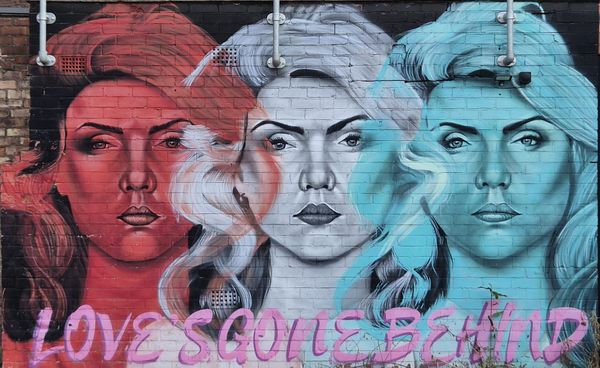
“Learning to Say ‘I’m Not OK’”

I originally wrote this reflection around World Mental Health Day 2026. But mental health isn't something we should talk about on just one designated day of the year. So, this is simply my story of depression, recovery, setbacks, friendship and gradually learning that saying “I'm not OK” can sometimes be the first step towards becoming OK again.
There is a certain irony to my story.
Back in the early 1990s, while working for Nestlé in York, I became involved in helping establish a small charity supporting young people recovering from serious mental illness. I stayed involved for more than 20 years, eventually becoming its chairman.
Yet during those same early years, I was struggling with depression myself.
I withdrew from people, struggled to sleep properly, became lethargic and sometimes slept for much of the day. Thankfully, I had support from my employer, counselling and some good friends around me. Eventually the clouds lifted.
They didn't disappear forever.
Depression has returned at different points in my life, sometimes because of work pressures, sometimes because I simply took too much on. I've taken antidepressants, had counselling and gradually learnt that exercise, keeping busy, friendships and most importantly talking can make an enormous difference.
When the clouds returned
For a long time after York, life moved on and so did I. I had no major episodes of depression and perhaps assumed that chapter of my life had closed.
It hadn't.
In 2009, after returning to Manchester to work for the Co-operative Group, my mental health began to deteriorate again. There was another irony here. Drawing on my earlier experiences, I had helped champion a staff group concerned with mental health issues. I could talk about mental wellbeing and encourage other people to seek support, yet I was increasingly struggling myself.
I was unhappy in my work and became increasingly frustrated by some of the things I saw around me. Along with other colleagues, I spoke up about diversity and the lack of representation at senior levels. I also felt increasingly unsupported in my own role. Eventually the pressures began affecting both my work and my mental health.
My GP prescribed antidepressants. They weren't an instant answer, but gradually they helped lift my mood.
Looking back, there is a pattern here that took me years to recognise: I was often much better at advocating for other people's wellbeing than recognising when my own was beginning to suffer.
When doing something I loved, it became too much.
Then came the Altrincham French Festival.
In 2013, with no previous experience of organising a festival, I somehow found myself helping to put together a two-day French Festival in Altrincham. As anyone who knows me will probably appreciate, once I'd committed myself, I threw everything into it.
And almost everything that could go wrong seemed determined to have a go, including our main food caterer pulling out at the eleventh hour.
The festival itself was a huge success.
I wasn't.
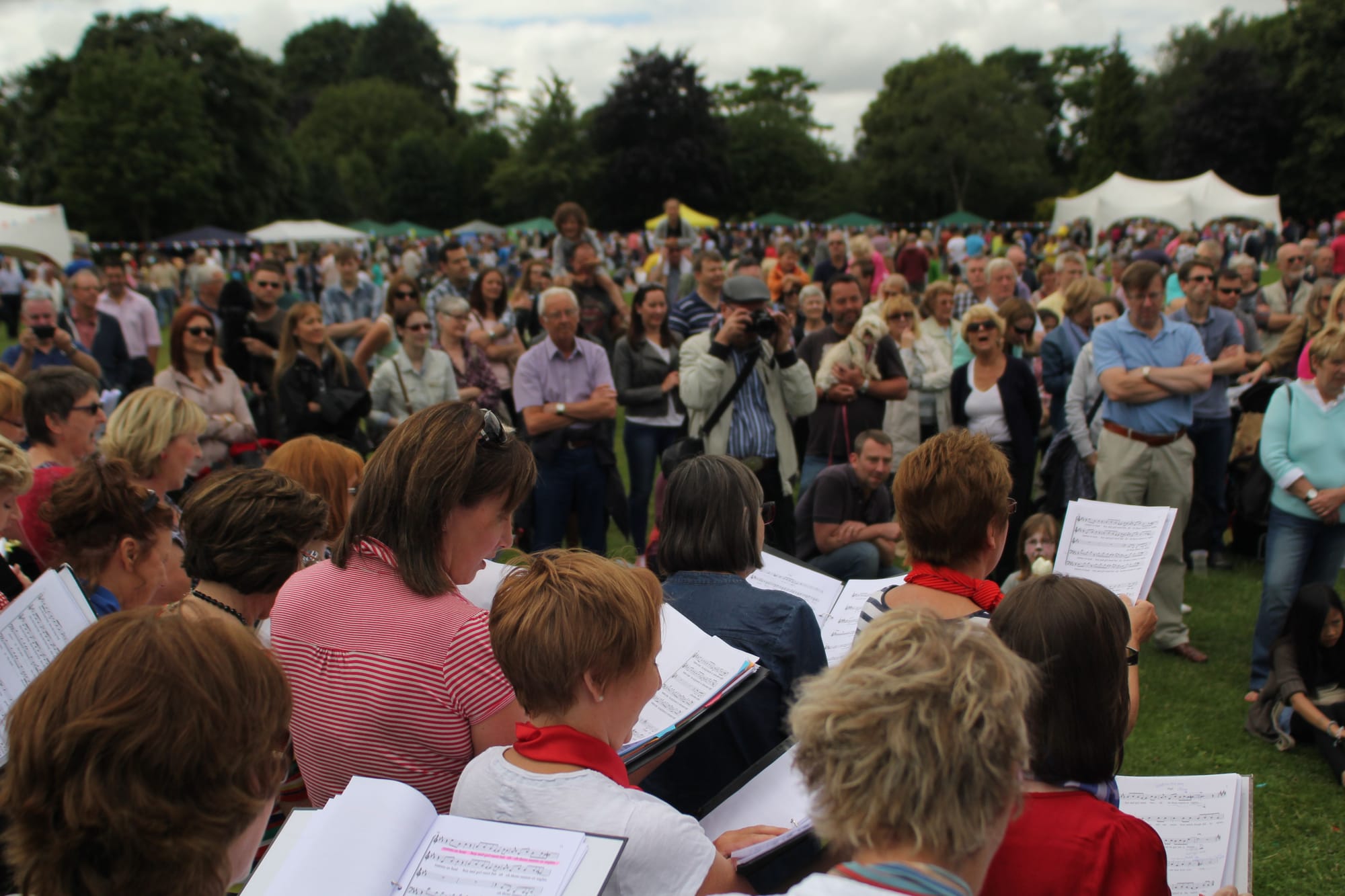
I had taken far too much upon myself, and, after virtually running the event single-handedly, the pressure caught up with me. I was signed off at work for four weeks.
There was also guilt. I had a young daughter at home and sometimes wondered whether, in throwing myself into organising community activities, I was letting my own family down. I had also stopped exercising regularly, something I would later realise was important for my mental wellbeing.
But the French Festival taught me something useful.
I went on to organise another four annual festivals but not on my own. I built a bigger team of volunteers, learnt to share the workload and returned to regular exercise.
Curiously, organising the festivals then became something that actually lifted my mood rather than damaging it.
Perhaps that was another lesson I needed to learn: sometimes it isn't necessarily what we are doing that is the problem. It's how much we are carrying and whether we are trying to carry it alone.
That lesson would become important again many years later.
There was another dimension to all this.
I grew up in a South Asian family and cultural environment where mental health wasn't something we readily talked about. Certainly, in my own wider family there could be an awkwardness around the subject. You got on with life. You coped. And if you weren't coping, you didn't necessarily announce it.
I suspect that made it harder for me at times to say three very simple words:
“I'm not OK.”
There have also been people along the way who have made me think differently about mental health.
In 2024, while working at Girlguiding, I helped a few colleagues organise an online event to mark World Mental Health Day. One of our guests was my good friend Emily Maguire, a singer, songwriter, musician, poet and author who has spoken very openly about her own considerable mental health challenges.
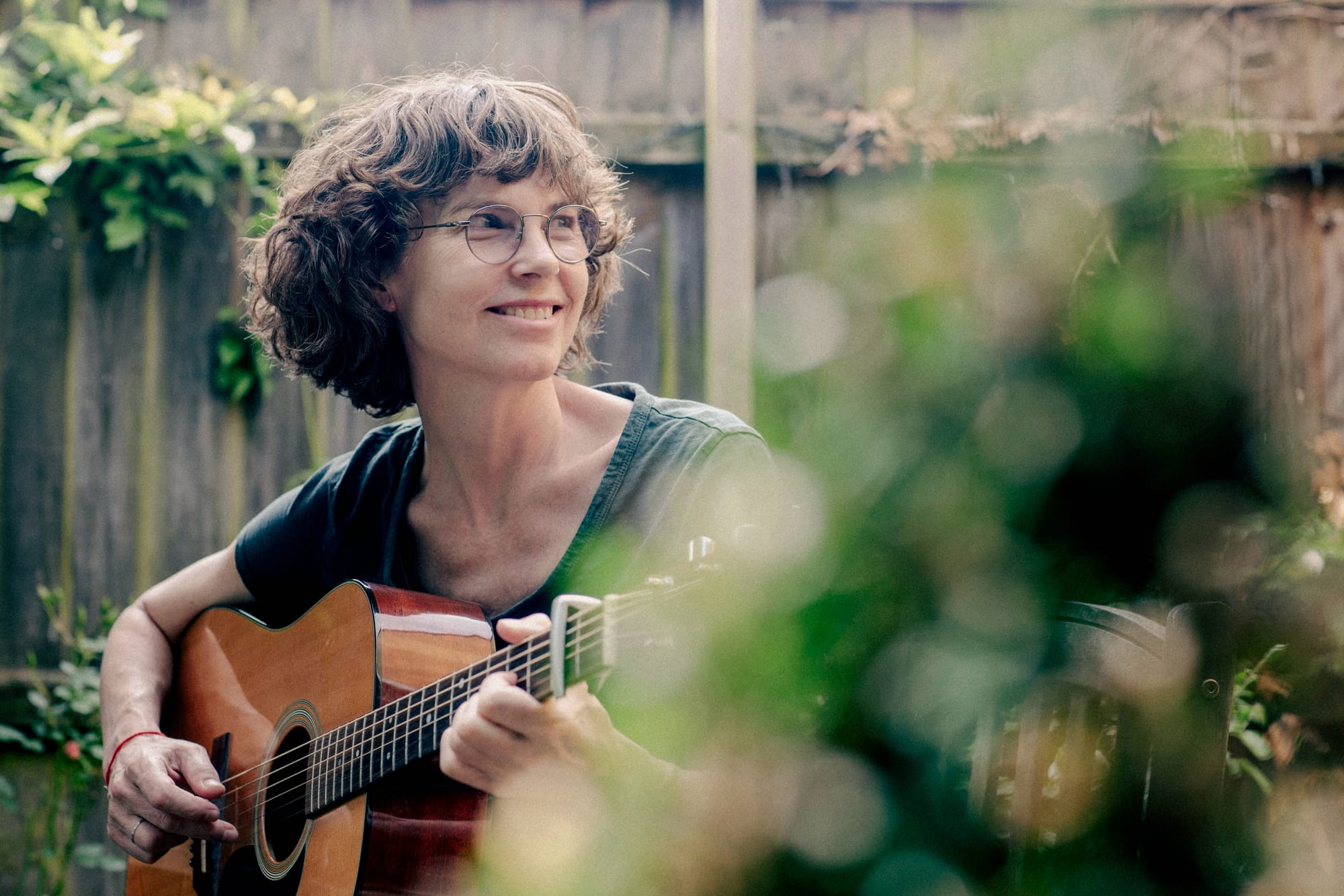
Emily has channelled many of those experiences into some beautiful and very personal songs. She has also performed for NHS patients experiencing poor mental health, using music to connect with people who may sometimes find it difficult to put into words what they are feeling.
It was Emily who introduced me to something I hadn't really appreciated before: the powerful part music can play in looking after our mental wellbeing.
I sometimes think of music as a kind of “medicine for the mind”. Not, of course, as a replacement for counselling, professional help or medication when we need them, but as another tool that can comfort us, lift our mood or simply help us through a difficult day. Sometimes a piece of music can reach places that ordinary conversation cannot.
Looking back at my own experiences, I realise there has never been one magic answer. At different times counselling, medication, friendship, exercise, talking openly and simply having people around me have all helped. I would now add music to that list.
Emily has also written books and poetry about her experiences with mental health. If you have a few quiet minutes, have a listen to some of her music at https://emilymaguire.com/. You may understand what I mean. 🎵
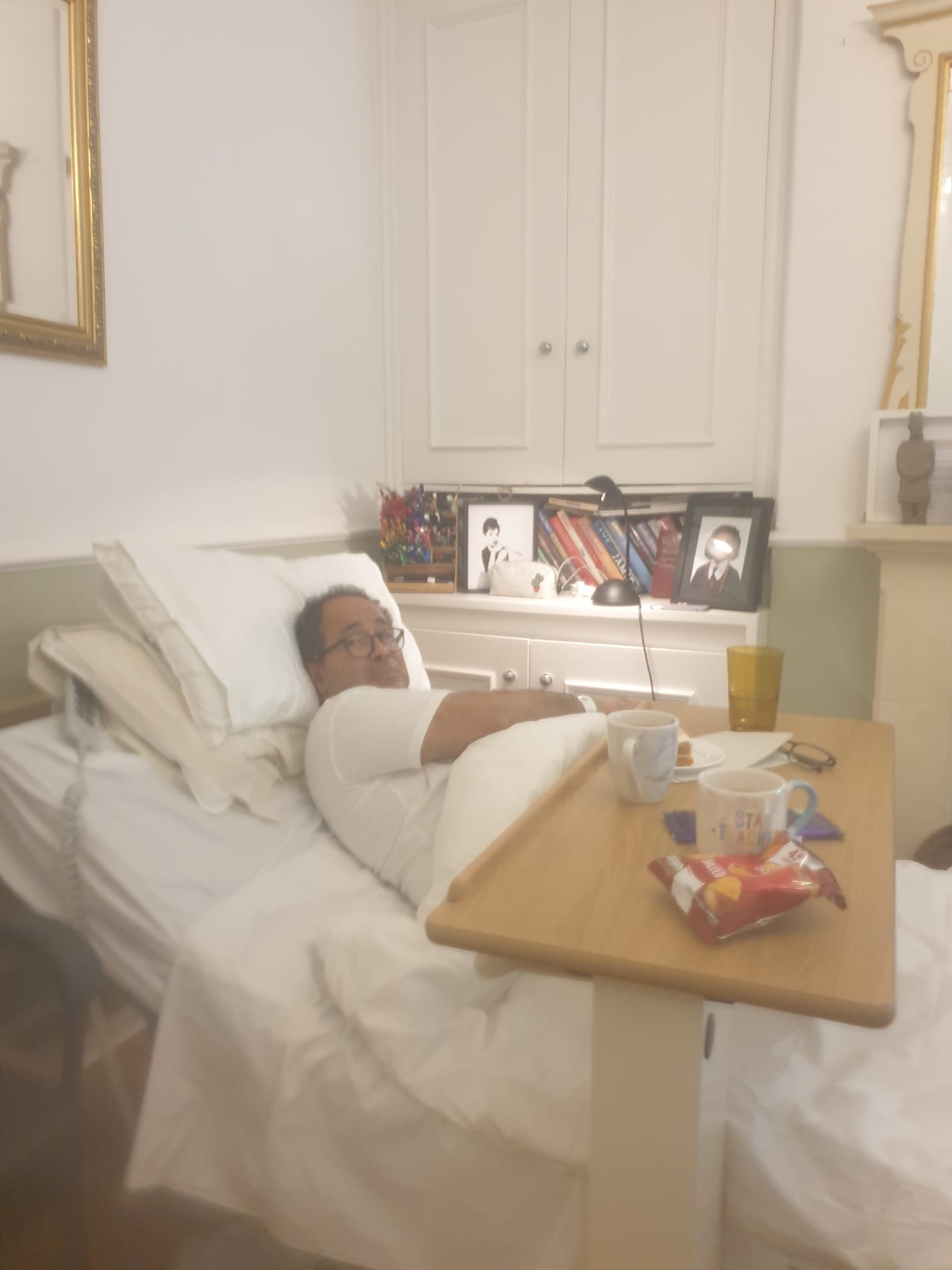
My biggest recent test came on Halloween 2024, when I fell down the stairs at home and ruptured the tendons in both knees. I needed surgery and spent almost a month in hospital before eventually returning home.
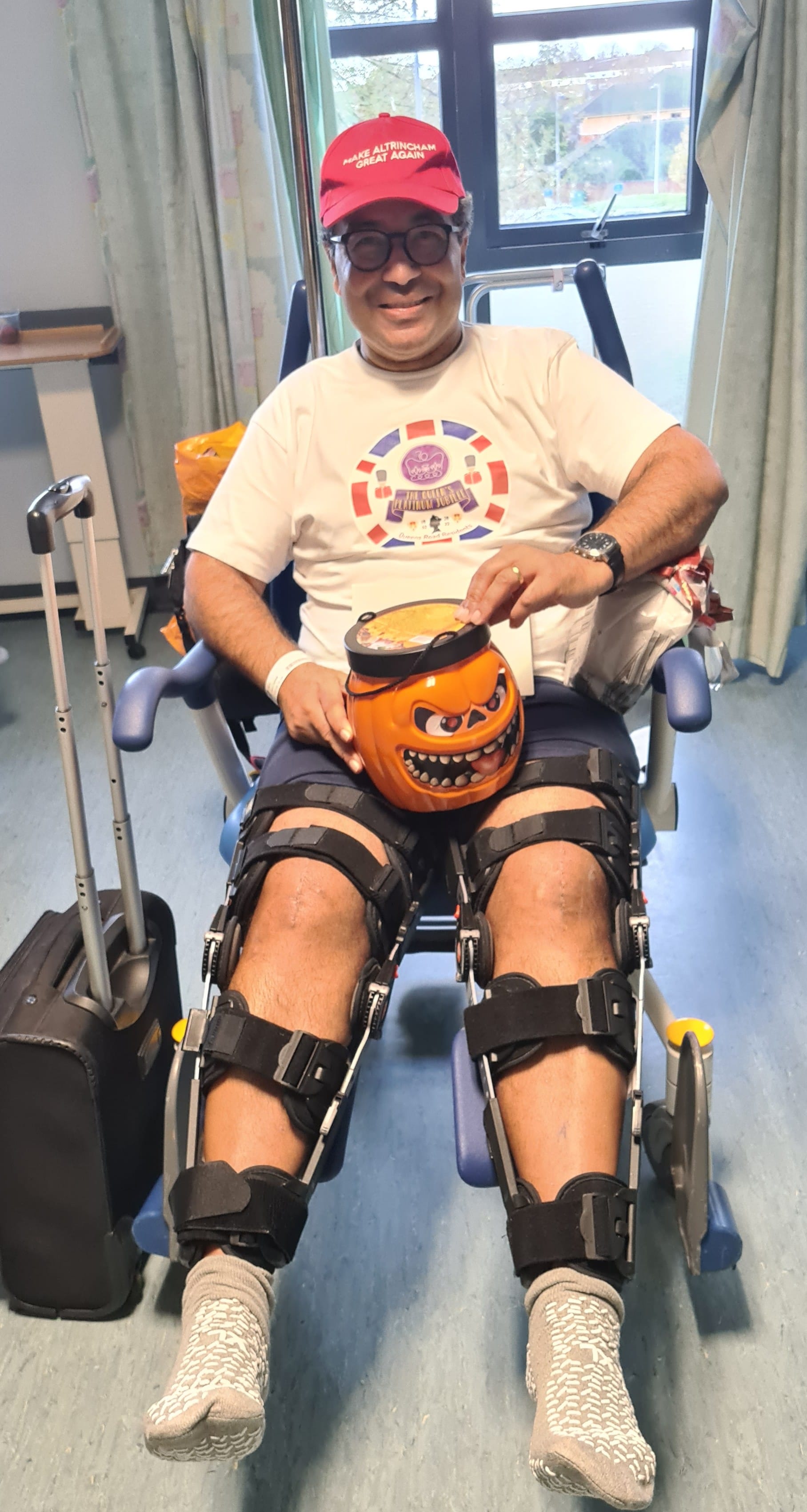
I thought coming home would be a huge step forward. Physically it was. Mentally, things turned out rather differently.
For the next few months, a specialist orthopaedic bed became the centre of my world. My wife and daughter were out during the day, carers came and went, and visitors were relatively few. For someone normally happiest when talking to people, organising things and generally sticking his nose into something or other, suddenly spending hour after hour alone was quite a shock.
The physical recovery was hard. The isolation was harder.
Slowly, almost without me noticing it at first, depression began creeping back in.
Then, quite by chance, a gentleman I knew suggested I try Andy’s Man Club.
I hesitated. Group therapy? Sitting in a room talking about my feelings with a group of men? Not exactly my natural habitat!
But I went.
And I discovered something remarkably simple: other men were struggling too.
Different ages, different backgrounds and very different lives, but many carrying things nobody around them could see. There was no judgement and no need to pretend everything was fine.
I still attend those Monday evening meetings. I'm back in the gym, and this year I even walked the Altrincham 10K, admittedly at a pace unlikely to trouble the Olympic selectors!
But there is a serious reason I am sharing this.
One of the hardest reminders of why we need to keep talking about mental health came when I lost a good friend to suicide. I had known him for more than 25 years, yet none of us really knew the battles he was fighting.
That has stayed with me.
It has also made me think more about younger people who may be struggling silently with pressures that can be very different from those my generation grew up with.
That is why I am supporting YoungMinds, a charity working to ensure that children and young people get the mental health support they need.
I'm sharing my story because perhaps someone reading it will recognise something of themselves or recognise it in a friend, colleague, neighbour or young person in their family.
If you would also like to support the work of YoungMinds, I have set up a fundraising page, and any contribution, however small, would be very gratefully received:
https://www.justgiving.com/page/zainul-sachak-10

But donating isn't the only way to make a difference.
Call someone. Have a coffee. Send that message you've been meaning to send. Ask how they are and occasionally ask twice.
Because one thing my own experiences have taught me is that “I'm fine” doesn't always mean that somebody is fine.
Keep talking. And perhaps, more importantly, keep listening.
Written by Zainul Sachak, 6th October 2026