East Manchester: Beyond the Beautiful Game
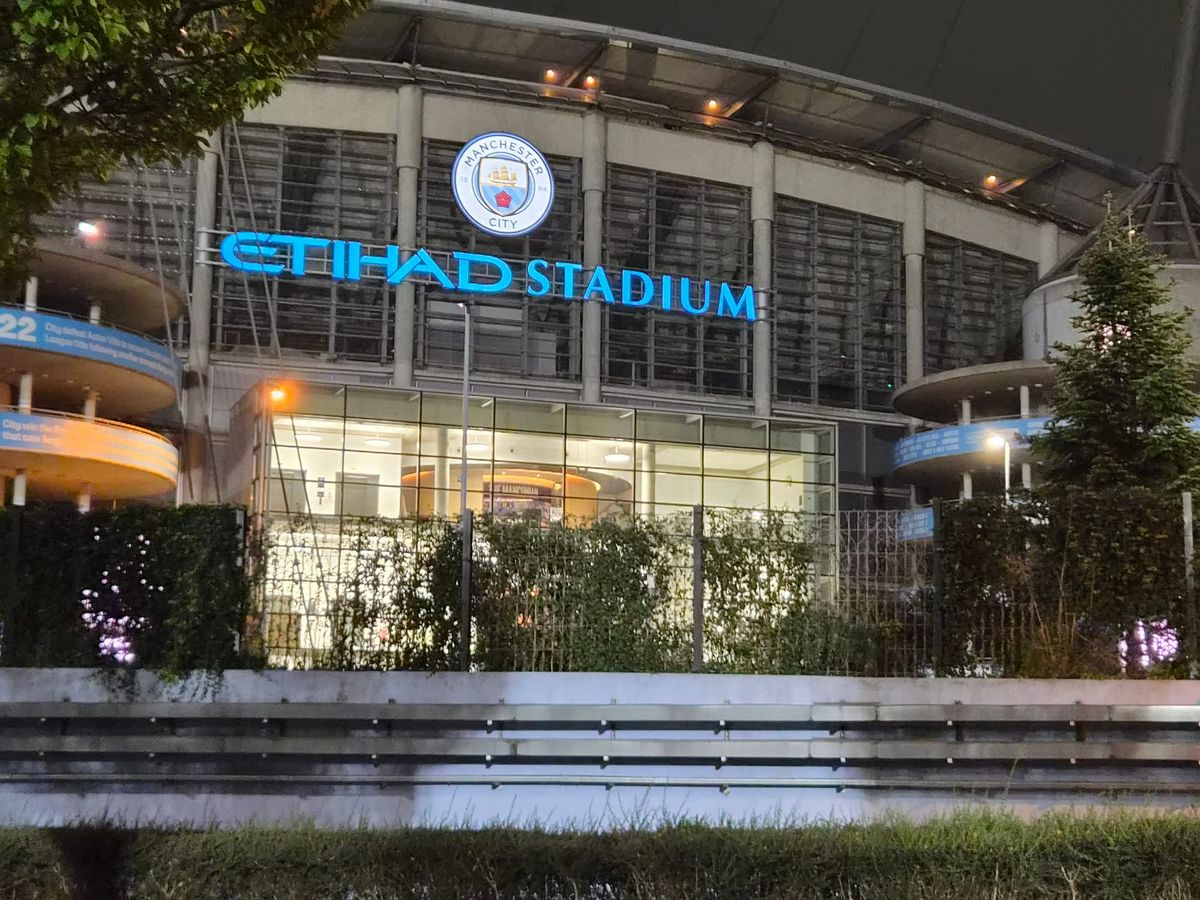
From neglected neighbourhoods to billion-pound investment, who really benefited?
There's been plenty of noise recently about Manchester City Football Club, its Abu Dhabi owners and their rather complicated financial affairs.
And as we all know, when football is involved, rational debate can disappear faster than a referee's credibility after a controversial VAR decision! ⚽
But behind the headlines lies another story worth examining: the regeneration of East Manchester and the role played by investment from Abu Dhabi.
I recently read an interesting article in The Manchester Mill by Mike Emmerich, an economist and former adviser to Sir Howard Bernstein, Manchester City Council's late chief executive.
Emmerich makes a compelling argument that we need to understand Manchester's economic history before passing judgement on the deals struck with Abu Dhabi.
Remember Manchester in the 1980s and 1990s?
The city had suffered decades of industrial decline. Between 1972 and 1984, Greater Manchester lost some 207,000 manufacturing jobs. Large areas of East Manchester were derelict; investment was scarce, and developers struggled to raise finance.
The 2002 Commonwealth Games helped kick-start regeneration, but the financial crash of 2008 brought many ambitious plans to a grinding halt.
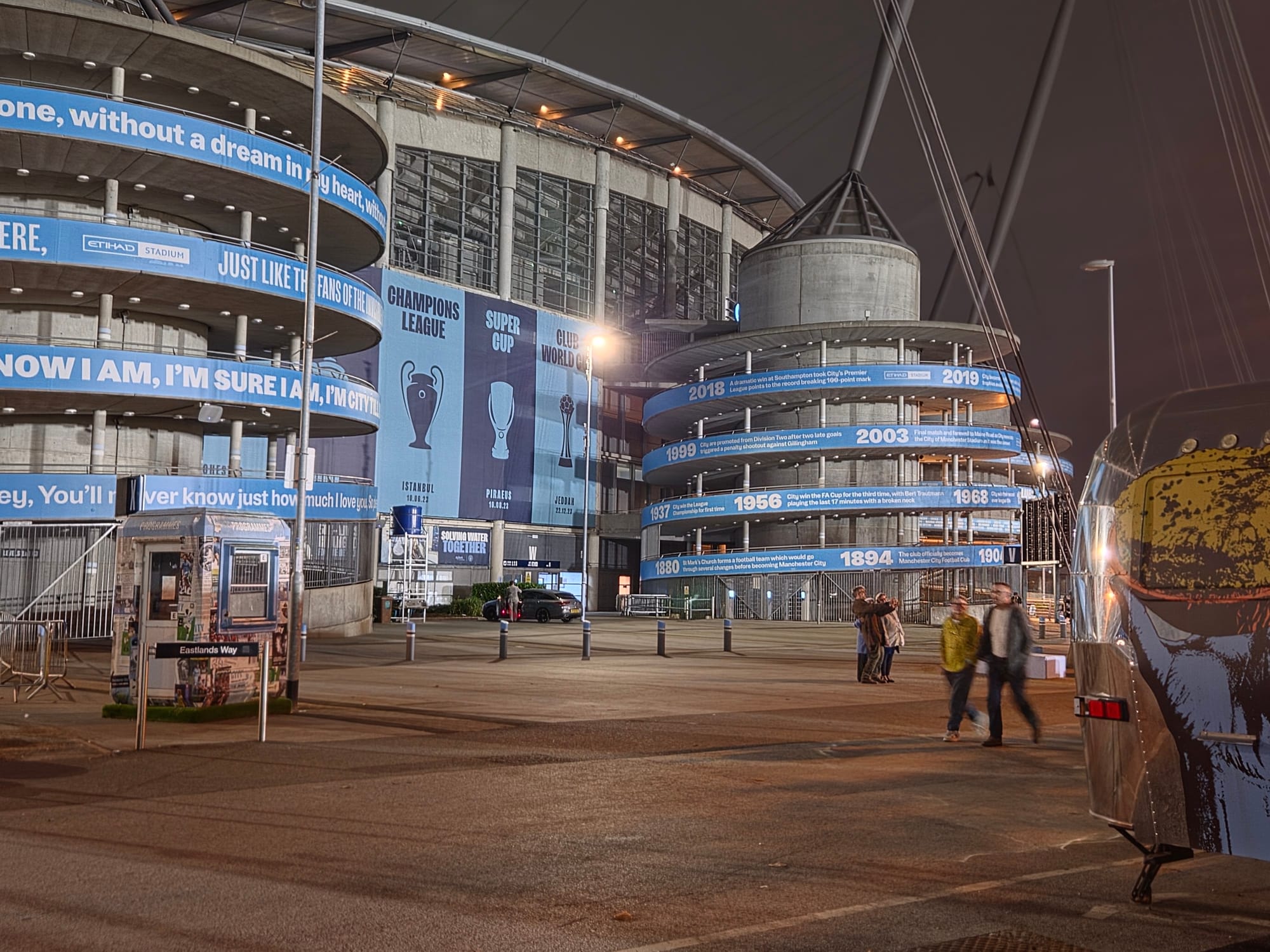
I saw East Manchester before the investment arrived.
I have a personal recollection of East Manchester from 2004, when I was working with Business in the Community (BiTC).
I helped organise a Seeing is Believing visit to Harpurhey School in East Manchester, part of a programme championed by the then Prince Charles to encourage business leaders to engage directly with communities facing serious economic and social challenges.
The initiative had its roots in the concerns about urban deprivation and social unrest that came to prominence following the Toxteth riots in Liverpool in 1981.
As part of our visit, we toured several neighbourhoods in East Manchester. What we witnessed was sobering: poor housing, high unemployment, neglected buildings and the visible consequences of years of underinvestment. Vandalism and antisocial behaviour were also concerns.
These were communities that desperately needed investment, opportunities and renewed confidence.
I remember thinking that it would take considerably more than a few pots of paint and some well-meaning community projects to turn things around!
The problems were deep-rooted, and the solutions would require serious investment and a long-term commitment.
So, when I read the current debate about Abu Dhabi's investment in Manchester, I cannot help recalling what I saw with my own eyes back in 2004.
That doesn't mean every deal subsequently negotiated was necessarily a good one. But it does mean we should remember the starting point before judging the outcome.
Along came Sheikh Mansour, who purchased Manchester City FC in 2008. The relationship subsequently expanded beyond football, with major investment in the Etihad Campus and residential developments across Ancoats and New Islington.
In 2014, Manchester City Council and Abu Dhabi United Group established Manchester Life, a joint venture to regenerate neglected neighbourhoods.
According to the council, the programme has delivered around £1.25 billion in regeneration investment.
Not exactly loose change found down the back of the sofa!
But was it a good deal for Manchester?
That's where the debate becomes interesting.
Researchers at the University of Sheffield questioned whether the council had effectively undervalued public land, estimating a shortfall of £12.34 million. They also challenged the lack of affordable housing and the financial arrangements surrounding the developments.
Emmerich disputes the land valuation argument, pointing out that the researchers compared deals negotiated in 2015 with land prices achieved several years later, after regeneration had helped increase demand.
He also argues that few investors were willing to commit the necessary capital when the property market was struggling.
Both arguments deserve proper examination.
There are other legitimate concerns. The original Manchester Life developments contained no social housing, while a separate ten-year agreement gave Abu Dhabi investors preferential opportunities over certain council-owned land.
The council retained a 49% stake in the development companies, but not ownership of the completed properties. How much value ultimately returned to the public remains an important question.
And we should not forget that Manchester's regeneration was already underway before Sheikh Mansour bought the football club. Abu Dhabi did not single-handedly rescue the city.
So where does that leave us?
The transformation of Ancoats, New Islington and parts of East Manchester is clearly visible. But attractive buildings and rising property values are not, on their own, proof that every commercial decision was right.
Equally, we cannot automatically assume that the deals were bad simply because Abu Dhabi investors made substantial profits.
The important questions are whether the council negotiated reasonable terms, whether there were credible alternatives at the time and, above all, whether local communities benefited.
As for Manchester City FC, the football authorities must deal independently with the club's financial rule breaches and the appeal process.
That is a separate matter from assessing the wider regeneration investment.
My plea is simple. Before rushing to judgement, let's understand the facts, the economic circumstances and the alternatives available at the time.
We should neither give Manchester's decision-makers a free pass nor condemn every investment because of its association with a football club.
Let's debate what Abu Dhabi's investment achieved for East Manchester, who benefited, who missed out and what lessons we should learn.
Having witnessed some of East Manchester's problems back in 2004, I believe we owe it to those communities to examine both sides of this story.
Did the Abu Dhabi investment help transform neglected neighbourhoods? Clearly, substantial physical regeneration has taken place.
Could Manchester City Council have negotiated better terms, secured more affordable housing or ensured a greater financial return for its residents? Those are entirely legitimate questions.
But before passing judgement, let's understand the facts, the economic circumstances and the alternatives available at the time.
A Lesson from Barack Obama — Investing in the Next Generation
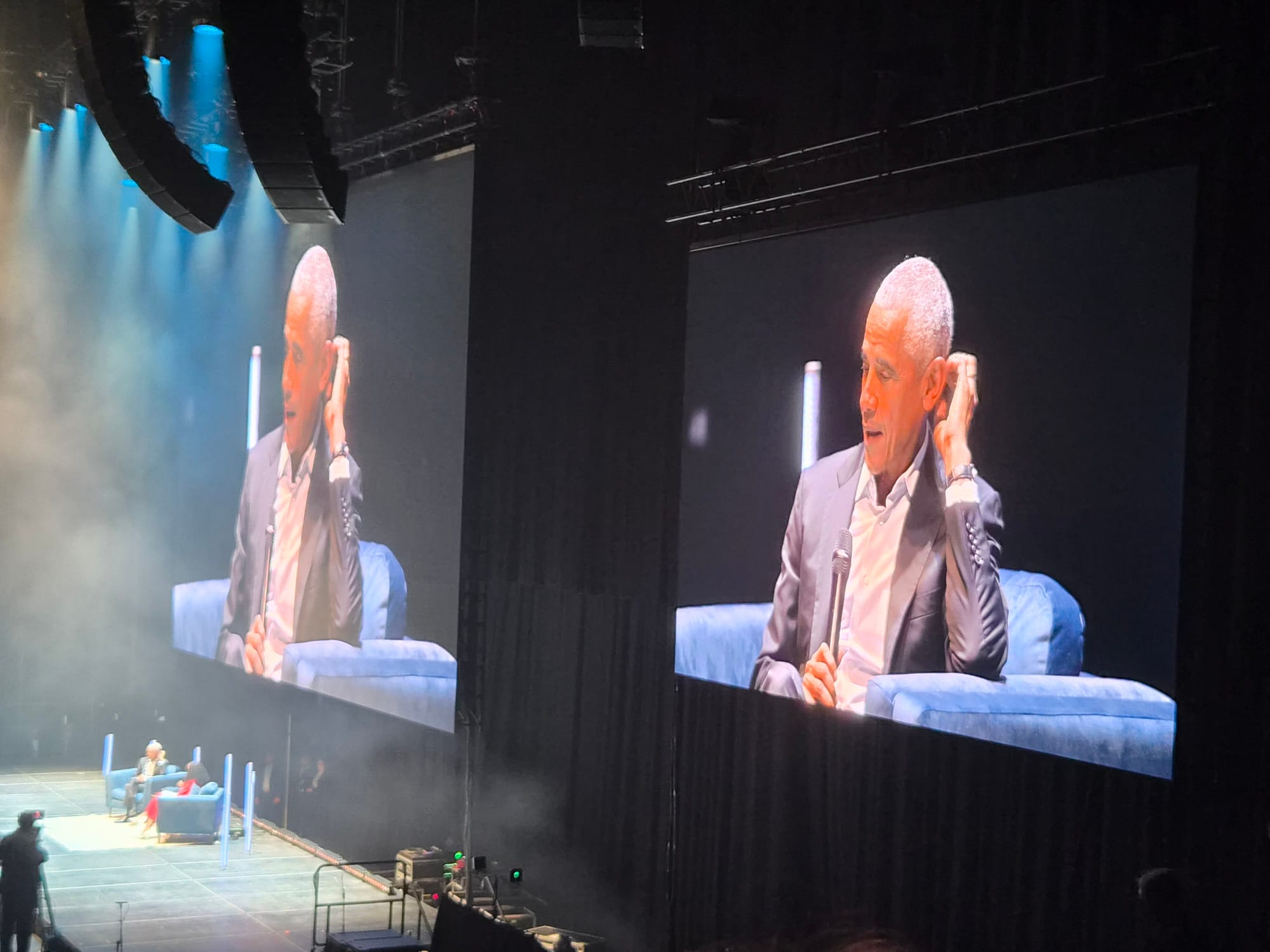
There was an interesting coincidence this week. I attended Barack Obama's talk at Co-op Live in Manchester with my daughter, just a stone's throw from the Etihad Stadium, in an area that has undergone remarkable transformation.
Obama spoke passionately about the importance of investing in young people, nurturing future leaders and giving them the confidence and opportunities to shape their own futures.
He also reminded us of Manchester's proud history, recalling how cotton workers supported the struggle against slavery during the American Civil War, despite the hardship it brought upon themselves.
It was a powerful reminder that progress isn't simply about wealth or economic growth. It's also about the values we uphold and the opportunities we create for others.
And that brings me back to East Manchester.
In 2004, I witnessed neighbourhoods desperately needing investment. More than two decades later, we have impressive buildings, new homes, businesses and sporting facilities.
But here's the question I'd really like answered.
Have we invested as successfully in the young people growing up in these communities as we have in the bricks and mortar surrounding them?
After all, there's little point building a shiny new neighbourhood if the youngsters who grew up there cannot afford to live in it or share in its prosperity.
Perhaps that is the real measure of successful regeneration, not simply how much money was invested, but how many lives were improved.
And that's something worth thinking about, whether you're wearing a blue football shirt, a red one, or have absolutely no interest in football!
And please, let's not confuse the regeneration of East Manchester with the purchase of Manchester City Football Club. They are connected stories, but they deserve to be judged on their own merits.
After all, Manchester's future matters rather more than which football team happens to be lifting a trophy, although I appreciate that some supporters may find that difficult to accept! ⚽
After all, there's more to Manchester than 90 minutes of football, even if some supporters might disagree! 😉
What do you think? Was the regeneration a fair deal for Manchester and its residents?